Whole-Home Mold Remediation in Pembroke Pines, FL
The water came in under the sliders during the June storms, ran across the tile, and soaked the bottom of every wall on the ground floor. Or the house sat empty from May to October with the air conditioning off, and now there is growth on the furniture, the closet walls, and the underside of the kitchen cabinets. One patch is a repair. This is a project. This site connects you by phone with an independent local provider who does whole-home mold remediation in Pembroke Pines and across Broward County.
What the crew does first
A whole-house job is planned room by room before anything is opened. The crew walks the house with a moisture meter and marks every wall, cabinet, and ceiling that reads wet, then maps where the water went. On a slab house that usually means the bottom two feet of every exterior wall on the side the water came from, plus any interior wall that shares a wet plate.
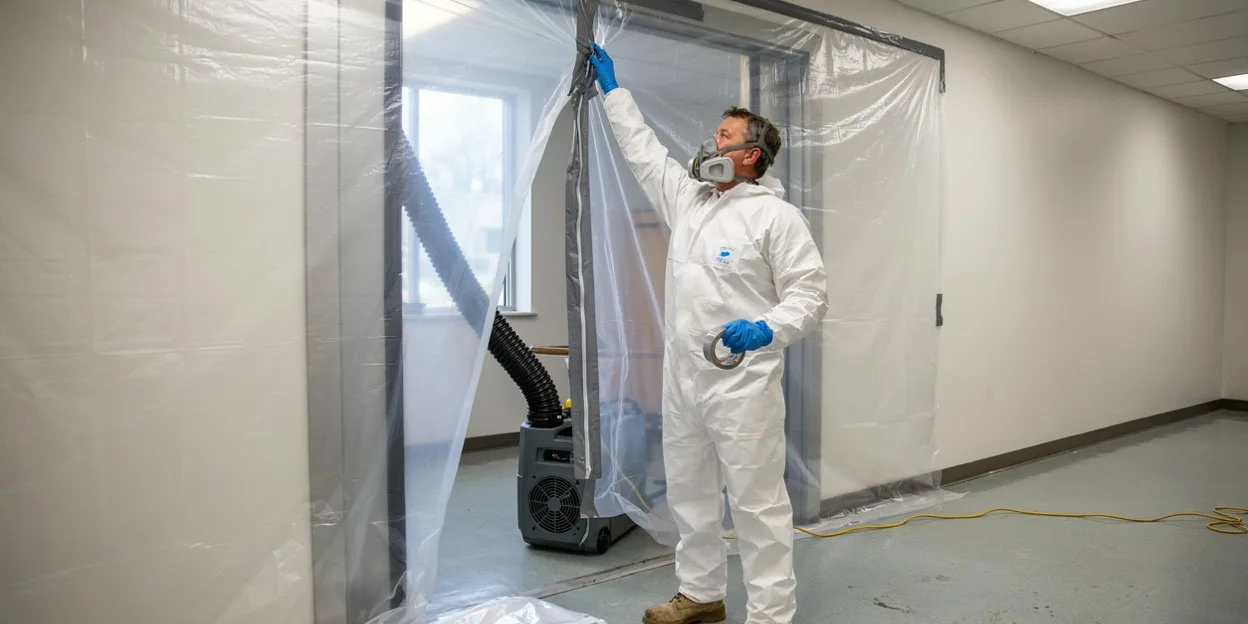
Then they build containment in stages. Rather than one plastic wall at a door, they seal off the house in zones, run negative air in the zone being worked, and cover every supply and return vent so the air handler is not pulling dust through the ductwork. Furniture and belongings get sorted into three groups: hard items that can be cleaned, soft items that can be cleaned off-site, and porous items that go.
What to do in the next hour
Get the air conditioning running if it is not, and set it to cool. Humidity is what is feeding the growth, and a running system pulls it down faster than anything you can buy at a hardware store. If the system itself smells when it runs, tell the crew, because the air handler may be part of the job and HVAC mold cleaning gets folded in.
Do not start hauling things to the curb. Photograph every room first, including the contents, because an insurance claim on a whole house depends on that record. Do not run box fans through the house. They move spores from the wet rooms into the dry ones.
What is usually saved and what is removed
Drywall, baseboard, insulation, carpet and pad, particleboard cabinet bottoms, and the paper facing on some built-ins come out where they read wet. Block walls, slab, tile, metal studs, and most solid-wood framing stay and get cleaned. Kitchen and bath cabinets are the hard call. Solid-wood boxes can often be cleaned and dried. Particleboard boxes that sat in water rarely can.
Once the porous material is out, the crew HEPA vacuums and wipes every surface in the zone, then runs drying equipment until the block and slab read dry. Fixing the source is part of the job. For a storm house that means the doors and sliders that let water in. For a closed-up seasonal house it means a humidity plan for the next summer. When the house is dry, mold damage repair puts the walls and cabinets back.
Broward County notes: storms, seasonal homes, and licensing
Southern Broward sits low, and the June 2024 rains put water into houses in Hollywood, Dania Beach, and Pembroke Pines that had never taken water before. Storm water that comes in through a slider soaks the bottom of every wall it reaches and wicks up the block. Homes that were left closed while the owner waited on an adjuster often grew mold on every floor-level surface within a few weeks.
Seasonal houses are the other whole-home pattern. An owner leaves in April, turns off the air to save money, and comes back in November to a house that smells like a boat. Everything soft is affected, and the job is as much about contents as walls.
Florida licenses mold remediators separately from mold assessors under Chapter 468, Part XVI, and for jobs this size the company that assessed the house may not remediate it within 12 months. If an assessor already wrote a protocol for your home, the crew works from it. Many Florida policies cap mold at around $10,000 unless an endorsement adds more, and a whole-house job usually runs past that, so ask your adjuster before the work starts. Rebuilding walls and cabinets often needs a permit from the City of Pembroke Pines, or from Broward County in unincorporated areas.
Calling about whole-home mold remediation
Have the address, how the water got in or how long the house was closed, and how many rooms are affected. Say whether an adjuster has been out and whether you already have an assessor's report. Call (954) 519-7189.