Mold Odor Removal in Pembroke Pines, FL
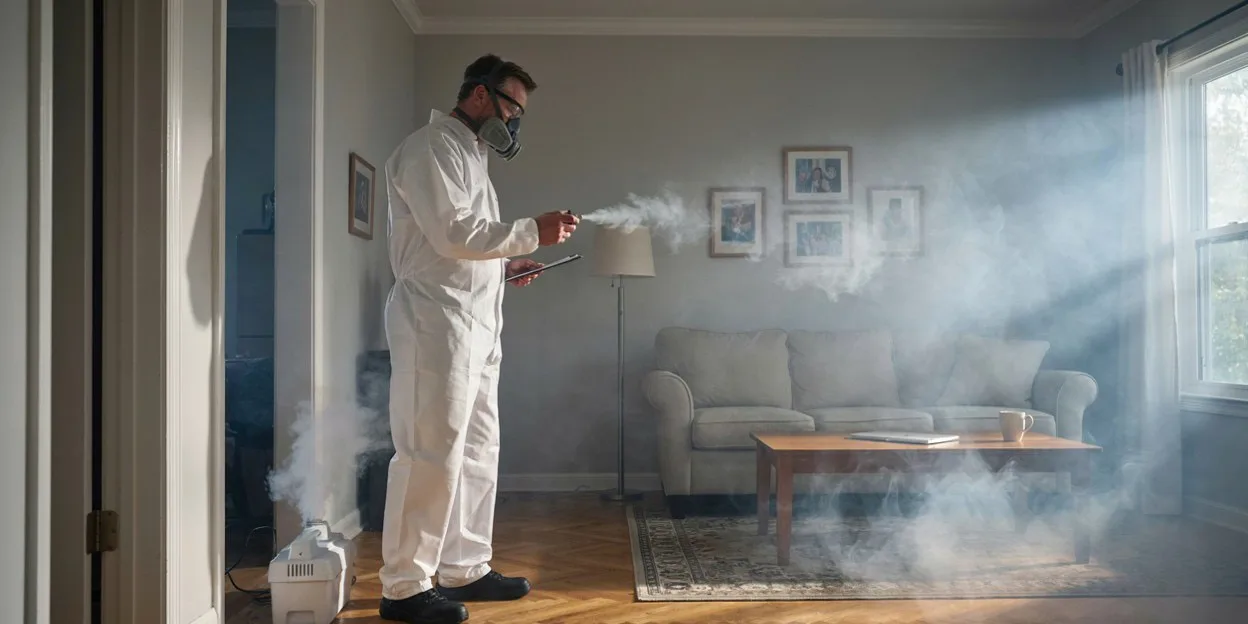
You have wiped the bathroom, run the fan, bought the plug-in things, and the house still smells like a wet towel that was left in the car. Nothing looks wrong. The smell is strongest in one bedroom, or it comes and goes with the weather, or it hits you at the front door after a day away. That musty odor is the mold giving away its location. This site connects you by phone with an independent local provider who does mold odor removal in Pembroke Pines and across Broward County.
Tracing a musty smell to the wet wall behind it
No deodorizer comes out of the truck at the start of this job. They start with a moisture meter and their nose, and they work the house the way a plumber traces a leak. The smell is strongest close to the source, so they check the places Broward houses hide water: the wall behind the washer, the closet that shares a wall with the air handler, the bottom of a vanity, the ceiling under an attic duct, and the base of the exterior wall on the side that faces the summer storms.
Once the meter shows a wet wall, they cut a small opening to see what is going on behind the drywall. Most odor calls end with the crew finding a patch of growth on the back side of drywall, inside a wall cavity, or on the underside of a cabinet floor. Because the odor stays as long as that material stays, the crew removes it under containment, following the same steps as any mold removal.
Stop masking the smell and start mapping it
Stop covering it. Sprays, candles, and plug-ins mask the smell for an afternoon and make it harder for the crew to trace. Keep the air conditioning on and set to cool. If the smell gets stronger when the system runs, note that, because it points at the air handler or ductwork and HVAC mold cleaning may be part of the job.
Go room to room in your house and write down where the odor peaks and at what time of day. Morning versus evening, humid days versus dry ones, one room versus the whole floor. When you call, that pattern is worth more to the person who answers than any other detail.
The smell leaves when the wet material does
Whatever is wet and porous comes out: the section of drywall, the insulation behind it, the particleboard bottom of a cabinet, the carpet pad in the corner that took water from a window. Block, slab, tile, and solid framing get cleaned and dried in place.
Once the material is out, the crew HEPA vacuums and wipes down the zone and keeps air scrubbers running until the room no longer smells, rather than masking it. If the source was a leak, it gets fixed as part of the job. If the source was humidity alone, they will tell you, because then the fix is a drier house, not another round of removal. Once the block and framing read dry, mold damage repair puts the wall back together.
Humidity, closet air handlers, and houses closed for the summer
Broward runs above 70 percent humidity for most of the year, and a house that is not pulling that moisture out will smell. An air conditioner that is too large for the house is a common cause. It cools the air fast, shuts off, and never runs long enough to dry it. Closet air handlers on a slab are another. The drain pan overflows or the line backs up, the closet floor stays wet, and the smell rides the ductwork into every room.
Seasonal homes that sat with the air off for a summer often smell without any visible growth, because the mold is on the back of the furniture, inside closets, and under the cabinets. That can turn into a whole-home mold remediation rather than one wall.
Florida licenses mold remediators under Chapter 468, Part XVI, and you can look up a provider at myfloridalicense.com. Most Florida policies cap mold coverage at a fixed amount and exclude mold from a gradual leak, so ask your adjuster early if the crew finds a leak that has been running a while.
When you call about a smell you cannot find
Have the address ready, along with the room where the odor is strongest and the date you first picked up on it. Mention any leak, storm water, or roof work in the past year, and whether the smell changes when the air conditioning runs. Call (954) 519-7189.