Black Mold Removal in Pembroke Pines, FL
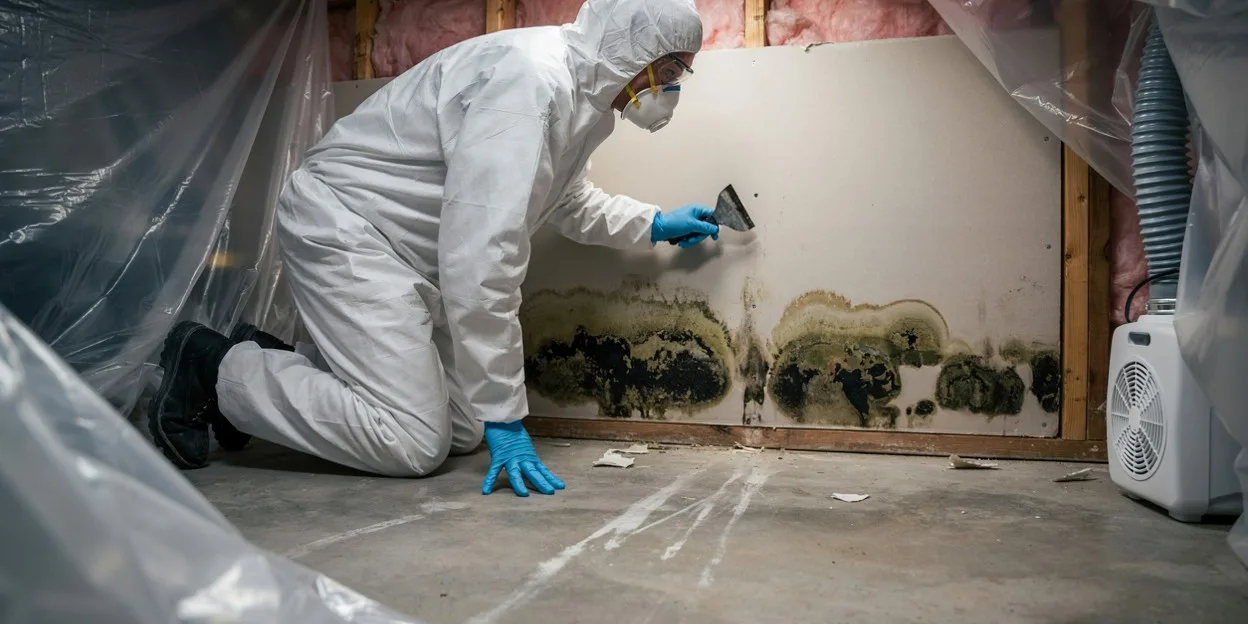
You pulled the washer out to fix a hose and found a patch of black growth on the drywall behind it, and every search result is telling you to leave the house. This site connects you by phone with an independent local provider who does black mold removal in Pembroke Pines and Broward County.
Color is not a diagnosis, so the meter goes on first
The crew does the same thing they do for any mold: find the water and measure the wall. Color is not a diagnosis. Many common molds look black or dark green on drywall, and the one people fear, Stachybotrys, cannot be identified by eye. Only a lab can name a species, and for removal it does not change the process. Wet porous material with growth on it comes out.
So the crew reads the wall with a moisture meter, traces the source, and sets a scope. If the patch is bigger than about 10 square feet, a licensed assessor writes that scope and a separate remediator does the work.
Leave the patch alone and find the water
Do not scrub it or spray bleach on it. Scrubbing a dry patch sends spores into the air, and bleach on drywall does not reach the back of the board. Push the washer back a bit to block the spot, close the laundry room door, and keep the family and pets out of that room for now.
Find the water. Check the washer hoses, the standpipe, the water heater if it shares the space, and the AC air handler if it is in the same closet. Photograph the growth with something for scale, like a hand or a coin, so the provider can judge the size on the call.
Dark growth comes out the same way any mold does
Dark mold is treated like any other mold. Drywall, baseboard, insulation, and cabinet backs that are wet come out. Block, slab, and metal get cleaned. The crew builds containment at the door, runs an air scrubber with a HEPA filter as negative air, cuts the affected board, bags it, and HEPA vacuums and wipes everything left. Then they dry the area and someone fixes the leak.
For some people, mold makes allergies or breathing trouble worse. If someone in the house has asthma or a weak immune system, keeping them away from the work zone is reasonable. Beyond that, talk to a doctor, not a contractor. The Florida Department of Health has plain guidance on mold and health. For the full removal steps, see mold removal. The crew reads the wall with a moisture meter first, because the wet area, not the color, decides what comes out.
What Florida's license rules mean for a black mold job
Florida licenses mold assessors and remediators separately under Chapter 468, Part XVI, and for an area over about 10 square feet the same company may not assess and remediate your house within 12 months. Check both at myfloridalicense.com. If a company arrives, names the species on sight, and quotes a whole-house job before measuring anything, that is worth a second call.
Dark growth behind a washer or under a sink is common in Broward. The humidity is high all year, the slab stays cool, and any slow leak gives mold what it needs. In a condo, a leak from a shared wall or the unit above may be the association's problem to fix. Many Florida policies limit mold coverage to around $10,000 unless an endorsement adds more. Rebuilding the wall afterward usually calls for a permit from the City of Pembroke Pines or Broward County. A licensed assessor can give you a lab result if you want one, arranged on your own, but the removal will look the same either way.
When you call about a dark patch behind the washer
Have the address ready, plus roughly how big the patch is and which room it is in. Say whether the water source is found and stopped. Call (954) 519-7189.